
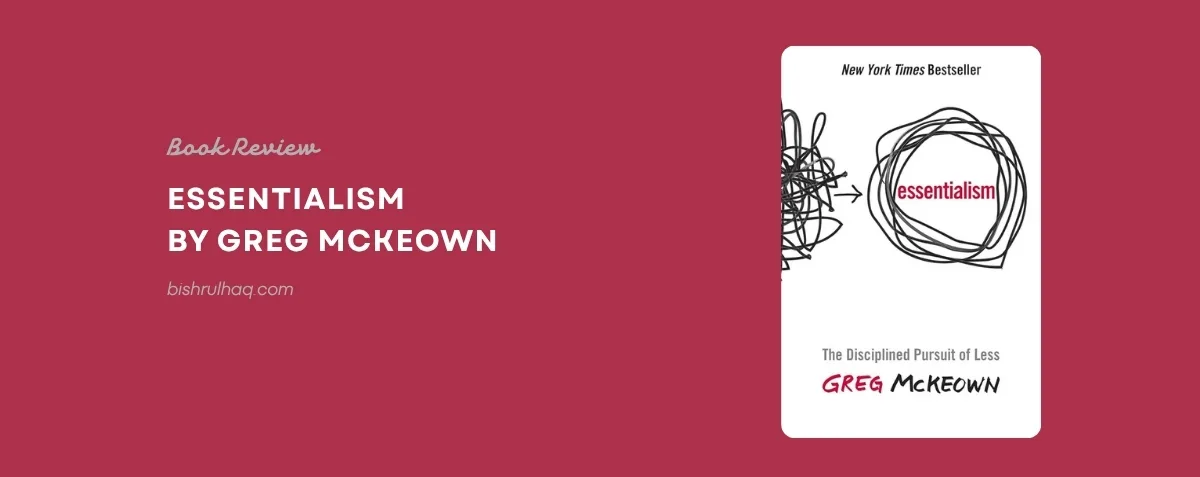
I did not read Essentialism because I wanted to become more productive. I read it because being busy had started to feel suspiciously easy. A full calendar can make you feel useful while quietly stealing the ability to choose.
Greg McKeown writes in a calm voice, which matters here. A louder book about focus would have felt like another demand. This one feels more like someone clearing a table so you can finally see what was buried under it.
The quiet rebellion of less
Quick verdict: Best for pruning a crowded life.
The best thing about this book is how calm it feels. McKeown does not sell focus as a hack. He treats it as a discipline of saying no before your life becomes a collection of accidental yeses.
The book is not arguing for laziness, and it is not trying to make your life look empty. It is arguing for selection. That difference matters. Essentialism is about protecting the few things that deserve real effort from the many things that only deserve politeness.
I liked the phrase less but better because it is small enough to remember. It is also uncomfortable. Most of us want more options, more open doors, more projects, more proof that we are not wasting our potential. McKeown asks whether that hunger is actually making the work worse.
Essential notes
- The book is about tradeoffs, not minimalism for its own sake.
- The phrase "less but better" earns its repetition.
- It is strongest when applied to calendars, meetings, projects, and commitments.
The parts I kept thinking about
The strongest idea is that if you do not choose your priorities, other people will choose them for you. That sounds obvious until you look at a normal week and realise how much of it was assigned by habit, guilt, inboxes, and other people's urgency.
The book also made me think differently about saying no. A no is not just rejection. Sometimes it is the only way to give a real yes the space it deserves. Without that, every yes becomes thinner than you intended.
I appreciated that McKeown connects focus with tradeoffs. This is where the book becomes more honest than typical productivity advice. You cannot have every version of a good life at the same time. Choosing one path means grieving the others a little.
The messy part of choosing less
The cleanest version of essentialism sounds peaceful: choose what matters, remove what does not, and live with more focus. The real version is messier. People are attached to your yes. You are attached to your own image of being available, helpful, ambitious, and easy to work with.
That is where the book becomes more than a productivity idea. It touches identity. Saying no can feel like becoming less generous, less impressive, or less safe. McKeown is helpful because he keeps pushing the reader back to the cost of saying yes to everything.
I thought about projects that look productive from the outside but are actually avoidance. Planning can avoid choosing. Research can avoid shipping. Meetings can avoid responsibility. A full schedule can avoid the silence where you would have to admit what the real priority is.
The book also made me respect margin. Margin can look lazy in a culture that rewards visible busyness, but margin is where better decisions come from. Without it, every choice is made tired, rushed, and already half-owned by someone else's urgency.
What I like is that the book does not ask for a dramatic life redesign on page one. It asks for discernment. Discernment is quieter than hustle and harder than it looks. You have to keep choosing the essential after the excitement of simplifying has worn off.
The question that makes it practical
The practical question from this book is not can I fit it in? That question keeps too many things alive. The better question is does this deserve me at my best? A task can fit into a week and still not deserve the best hours of your attention.
I would also use the book to separate obligation from avoidance. Sometimes we keep a commitment because it matters. Sometimes we keep it because ending it would require a difficult conversation. Essentialism asks you to notice the difference, which is uncomfortable and useful.
Who needs this most
This is a strong read for people with too many tabs open in their life. Not just browser tabs, but mental tabs: unfinished projects, vague obligations, half-promises, and plans that keep surviving only because nobody has questioned them.
It is also useful for builders, freelancers, managers, students, and anyone whose schedule fills before their judgment arrives. The book gives you a language for protecting attention without sounding dramatic about it.
What works and what does not
✓ What works
- Clear, memorable framework for protecting attention
- Good for work and personal decisions
- Encourages a slower, more deliberate kind of ambition
✕ Where it falls short
- Repeats the central idea more than necessary
- Some advice assumes you have more control than many people do
- Can sound obvious until you actually try to live it
The limits of the message
The one caution is that not everyone has equal freedom to simplify. Some people are carrying family pressure, financial pressure, work pressure, or immigration pressure. A clean no is easier when your life has padding.
The book can also repeat itself. In this case, the repetition is partly the point, but a reader who already lives by strict priorities may want more depth than the book offers.
How I would apply it this week
I would start with a calendar audit. Look at the next two weeks and mark what is essential, what is useful, what is performative, and what exists only because it was easier to accept than question.
Then I would remove one thing, not ten. Essentialism becomes believable through small acts of removal. One meeting declined. One project paused. One Sunday protected. The relief tells you the book was onto something.
Why it is worth reading
This is one of those books that becomes better when you use it as a filter. Before saying yes, ask whether the thing is essential. The awkwardness of that question is where the value lives.
The value of Essentialism is not that it gives you a clever productivity trick. It reminds you that a life can become crowded with good things and still lose the thing that matters most.

Comments
0No comments yet. Be the first to share your thoughts.