
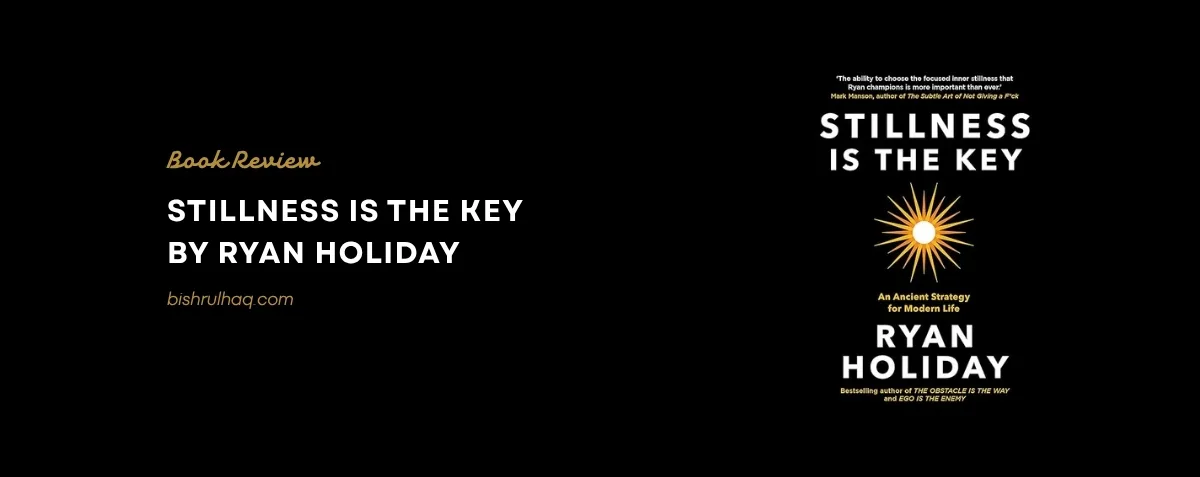
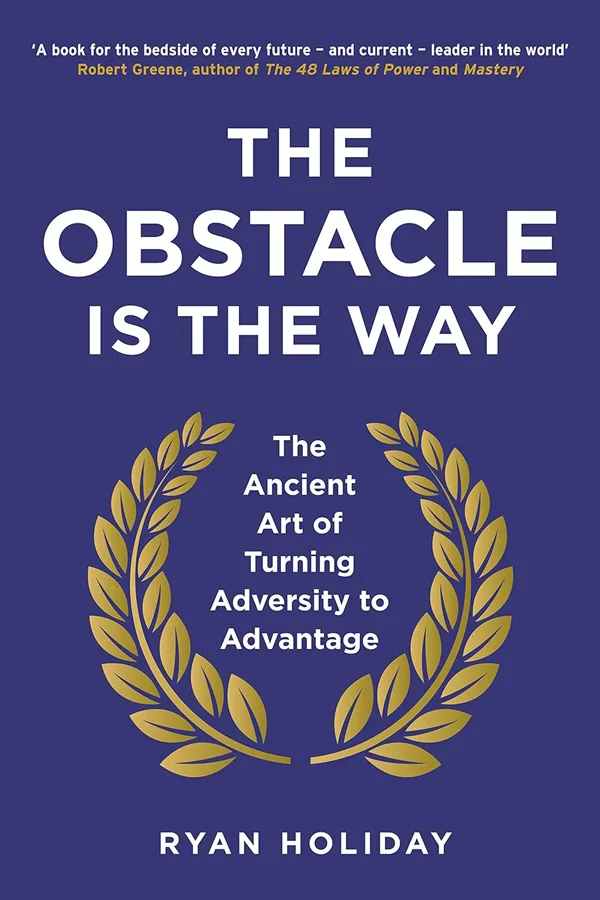
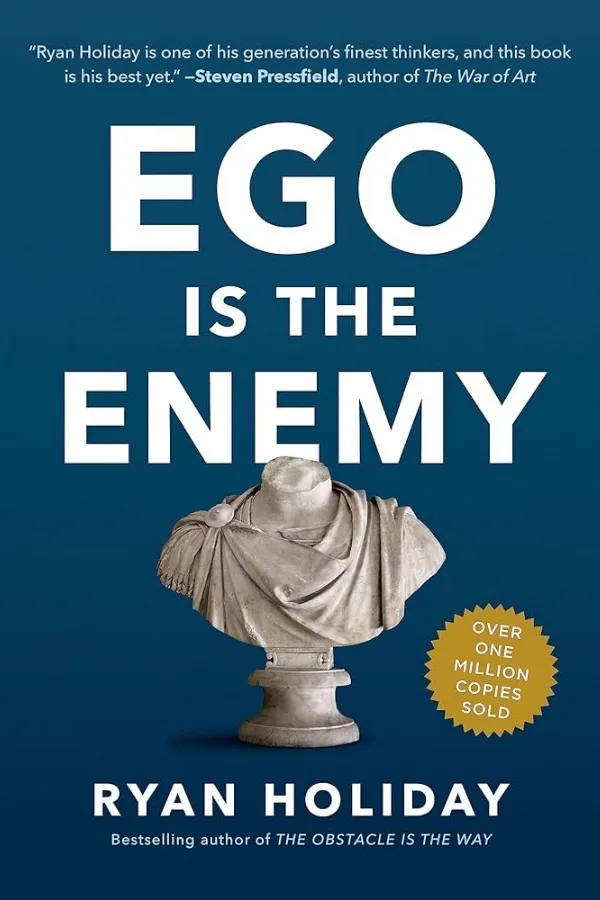
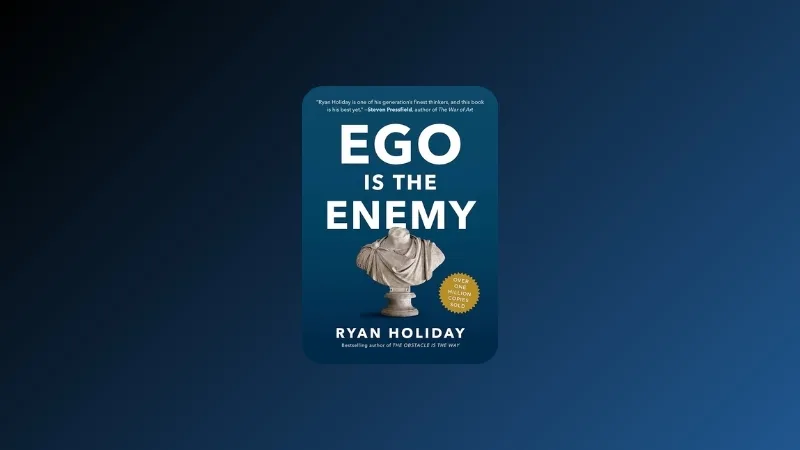
This book feels quieter than Ego Is the Enemy, and that is part of its charm. Ryan Holiday is still interested in discipline, but here the discipline is not about pushing harder. It is about becoming less available to every passing noise.
I read it as a reminder that calm is not a personality trait. It is something built, protected, lost, and rebuilt. That made the book feel less like a meditation slogan and more like a practical argument.
Stillness as a working skill
This book feels like Holiday turning down the volume. The argument is simple: without stillness, you become reactive. You confuse motion with progress. You let noise choose your priorities for you.
Holiday divides stillness across the mind, spirit, and body. That framework helps because it keeps the idea from becoming vague. Stillness is not only sitting silently. It is also clearer judgment, cleaner motives, better routines, and a body that is not constantly being ignored.
The strongest point is that reactivity is expensive. When every mood, headline, message, and insecurity gets immediate access to you, your life becomes busy in a way that does not always produce anything meaningful.
Stillness notes
- Stillness is presented as mental, spiritual, and physical discipline.
- The book is strongest when it connects calm to better decisions.
- It works best as a reminder, not as a complete manual.
Why calm matters here
The book made me think about the difference between motion and progress. Motion is easy to display. Progress is quieter. You can answer messages all day and avoid the one decision that would actually matter.
I also liked the way Holiday links stillness with judgment. Calm is not just pleasant. It is useful because it lets you see the situation without adding so much of your own fear, pride, impatience, or hunger to it.
Some of the best passages are simple reminders to protect solitude, reduce inputs, and stop feeding the mind constant stimulation. None of that is new, but it becomes new again when you realise how rarely you actually do it.
The modern noise problem
Stillness sounds simple until you notice how many forces are designed to prevent it. Apps want the next check. Work wants faster replies. News wants alarm. Ambition wants visible motion. Even rest can become another thing to optimise and report back on.
Holiday's book is useful because it treats stillness as resistance. Not resistance in a dramatic way, but in the quiet daily sense of not letting every external signal become an internal command. That is harder than it sounds.
I kept thinking about how often I confuse a quiet moment with an empty one. If there is no audio, no scrolling, no message, no task, the mind starts looking for something to grab. The book suggests that this discomfort is not proof that silence is useless. It is proof that attention has been trained badly.
The connection between stillness and character also matters. A reactive person can have good intentions and still cause damage because the reaction gets there first. Stillness creates a little space for values to catch up with emotion.
That is why the book belongs beside productivity books, not outside them. Better work often begins with a quieter mind. You cannot prioritise well when your attention is being dragged around by whatever shouted most recently.
The pause before reaction
The most useful version of stillness is not a perfect morning routine. It is the pause before reaction. The pause before sending the sharp reply. The pause before turning boredom into scrolling. The pause before accepting the loudest feeling as the truest one.
I would judge the book by whether it helps create that pause. If it does, even a little, then it has practical value. A calmer response can change a conversation, protect a decision, and keep one temporary mood from becoming a permanent consequence.
That pause also gives the book a moral edge. Stillness is not only about feeling peaceful. It is about becoming less careless with other people when your own mind is loud.
Who should keep this nearby
This is a good book for people who feel mentally overexposed. If your days are full of alerts, opinions, tasks, and emotional switching, the book will probably feel like a necessary lowering of the volume.
It is also useful for people in leadership or creative work. Both require space. You need space to think, space to notice, and space to choose a response before the loudest thing chooses for you.
What works and what does not
✓ What works
- Gentler than many modern productivity books
- Good examples from philosophy, history, and sport
- Makes quiet feel useful rather than decorative
✕ Where it falls short
- Some chapters overlap with Holiday's other Stoic books
- The short-chapter style can feel fragmented
- Readers wanting depth may want original Stoic texts too
Where the book thins out
The overlap with Holiday's other Stoic books is real. If you have read a lot of his work, some examples and rhythms will feel familiar.
The short chapter style is easy to read, but it can make the book feel more like a set of meditations than one deep argument. That is not bad, but it changes how I would approach it.
How to create a little stillness
I would use the book by creating two protected pauses each day. One before input, and one before response. Before input means not giving the phone your first clear minutes. Before response means waiting before replying from irritation.
A second practice is physical. Walk without audio. Eat without scrolling. Sit for five minutes after finishing work. The book becomes more believable when stillness is not only an idea but a small interruption in the day's speed.
The quiet lesson
The book reminded me that stillness is not withdrawal. It is preparation. You get quiet so you can see clearly, then act without being dragged around by every mood.
The book's value is that it makes quiet feel strong. Not dramatic, not impressive, just strong enough to change the quality of your next decision.



Comments
0No comments yet. Be the first to share your thoughts.