
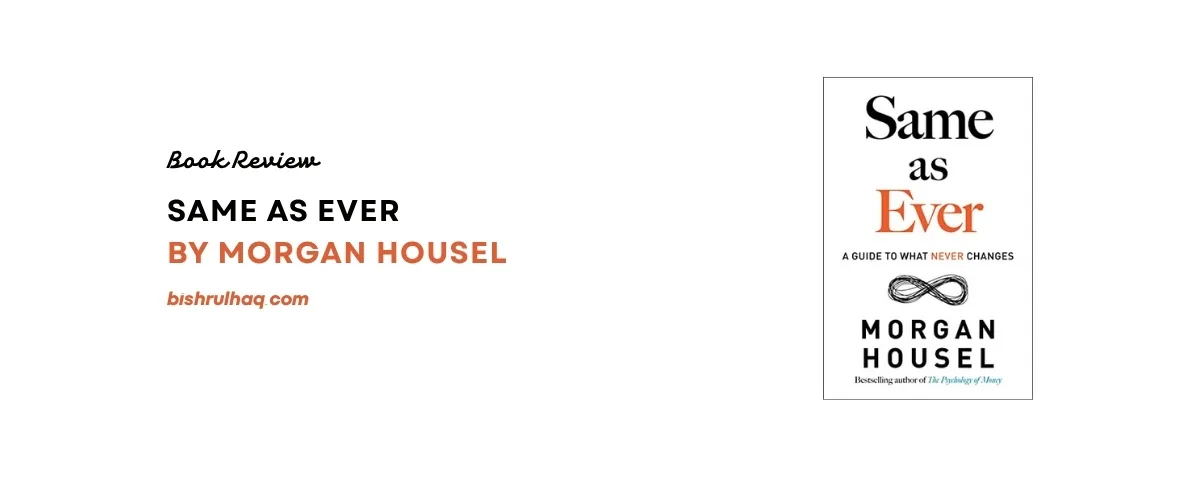
Morgan Housel is very good at making a calm sentence feel heavier than it first appears. Same as Ever uses that strength outside the narrower frame of money, asking what keeps repeating while the world keeps announcing itself as new.
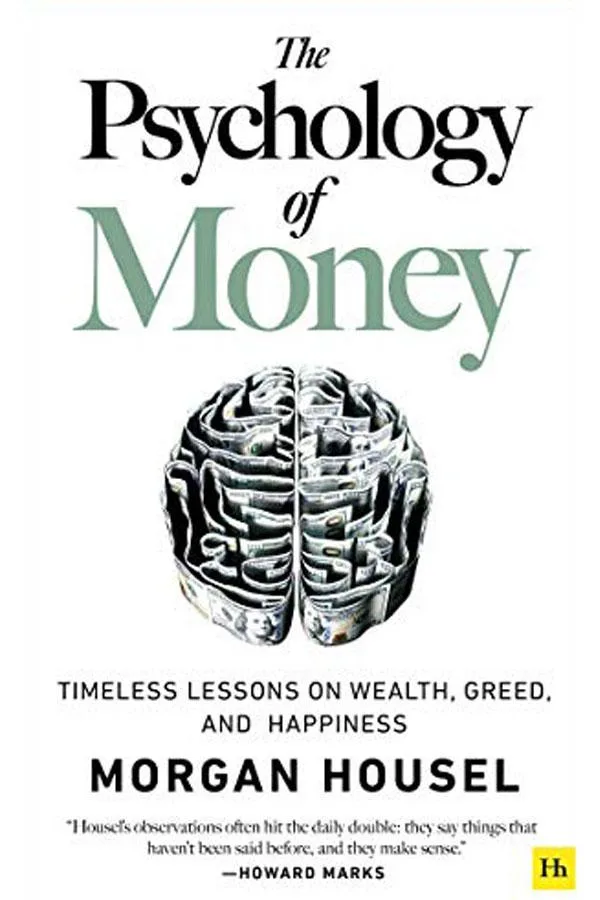
I read it with one question in mind: would this feel like a real extension of The Psychology of Money, or just the same voice moved onto a wider stage? The answer is a bit of both, mostly in a good way.
The patterns under changing headlines
After The Psychology of Money, the obvious question is whether Housel can widen the lens without losing the calm clarity that made the money book work. Same as Ever is built around a useful promise: the world changes, but human behaviour repeats.
The book's premise is useful because modern life over-rewards novelty. New tools, markets, platforms, crises, and predictions keep arriving. Housel asks the opposite question: what does not change much? Fear, greed, incentives, envy, uncertainty, storytelling, and the need to belong remain stubbornly familiar.
That frame gives the book its strength. Instead of trying to predict the next specific event, Housel watches the behaviours that tend to appear across many events. It is less exciting than prophecy and more useful than pretending certainty is available.
Patterns I marked
- The book looks for constants in risk, greed, incentives, stories, and uncertainty.
- It is strongest when Housel uses simple stories to explain recurring behaviour.
- It works as a companion to The Psychology of Money, not a replacement for it.
Where Housel is strongest
Housel is strongest when he turns a pattern into a small story. He has a gift for reducing complexity without making the reader feel talked down to. The lesson often arrives quietly, then stays around longer than expected.
I especially liked the focus on uncertainty. People want forecasts because forecasts feel like control. But the future is usually shaped by events that were easy to dismiss before they happened. The book encourages respect for surprise without becoming hopeless.
The recurring theme is human nature. Technology changes the surface. Incentives change behaviour. Stories move crowds. Fear spreads faster than patience. None of that is new, which is exactly the point.
Reading patterns instead of predictions
The best way to read this book is to stop asking it for predictions. Housel is not trying to tell you what exact event comes next. He is more interested in the old behaviours that tend to appear no matter what the event is called.
That shift is useful because predictions often make people feel smarter than they are. Pattern recognition is humbler. It admits that details will surprise us while also noticing that people under pressure often behave in recognisable ways.
I liked the book most when it connected incentives with behaviour. People can sound principled until incentives change. Markets can sound rational until fear spreads. Organisations can sound stable until status, survival, or competition starts bending decisions.
The book also reminded me that old truths can feel boring right before they become important. Save room for error. Expect surprise. Beware envy. Stories move people. Incentives matter. Patience is rare. None of these sentences are flashy, which may be why they are easy to forget.
Housel's style works because he does not overcomplicate those truths. He knows how to make a familiar idea feel freshly usable. That is different from originality, but it may be more valuable for everyday decisions.
The old pattern inside the new thing
The best habit after this book is to look for the old pattern inside the new headline. A new technology may still be about status. A new investment story may still be about greed and fear. A new workplace drama may still be about incentives.
That does not make the new details irrelevant. Details matter. But Housel helps you avoid being dazzled by them. When the surface changes quickly, the human pattern underneath may be the more useful thing to study.
Who will enjoy this most
This is a good read for people who liked The Psychology of Money and want Housel's style applied to broader life, business, risk, and decision-making. It is also useful for readers who enjoy essays more than one long argument.
It fits people who want perspective rather than instruction. You will not leave with a checklist. You may leave with better instincts about hype, panic, confidence, and the stories people tell when they want the future to feel tidy.
What works and what does not
✓ What works
- Calm, readable essays with strong pattern recognition
- Useful beyond finance
- Good reminders about uncertainty and human nature
✕ Where it falls short
- Less surprising if you already know Housel's style
- Essay collections can feel uneven
- Some ideas echo the earlier book
Where it feels familiar
The main caution is familiarity. If you have read Housel for years, some rhythms and ideas may feel expected. The book is still good, but it may not surprise you as much as his earlier work.
Essay collections also rise and fall by chapter. Some pieces feel sharp and necessary. Others feel like helpful reminders rather than fresh discoveries. That unevenness comes with the format.
How to use the pattern lens
I would use the book by asking what old behaviour is hiding inside a new situation. A new app may still be about status. A new market may still be about greed and fear. A new conflict may still be about incentives.
The second practice is humility around prediction. Instead of asking what exactly will happen, ask what range of human responses is likely when pressure rises. That question is less glamorous, but it travels better.
The value of old truths
The value here is not novelty. It is perspective. Housel is good at making old truths feel usable again, and that is rarer than sounding original for a chapter.
The value here is not novelty for its own sake. It is the reminder that many useful truths are old, patient, and waiting for us to stop being distracted by the packaging.



Comments
0No comments yet. Be the first to share your thoughts.