
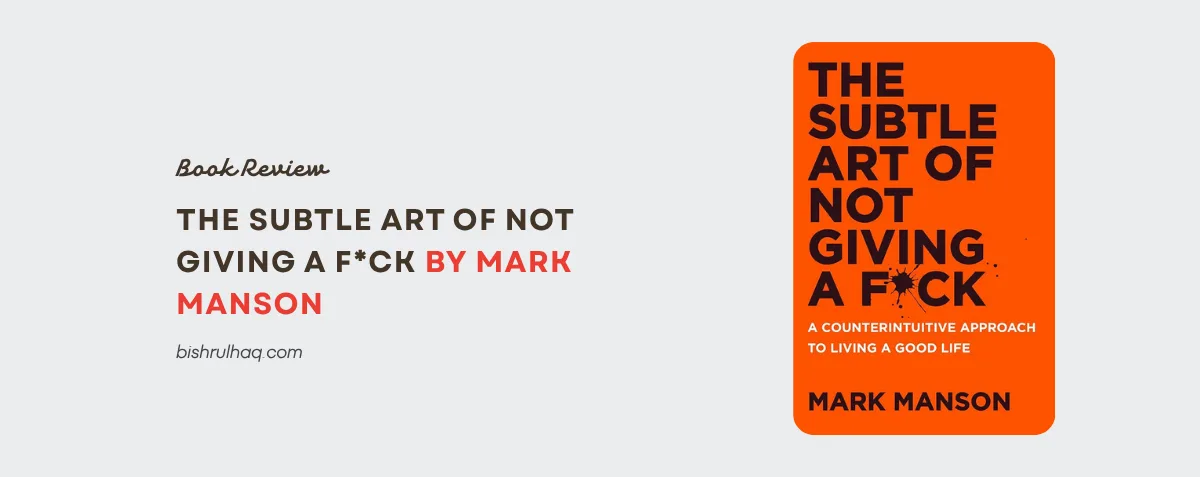
Mark Manson's book does not knock politely. It walks in with muddy shoes, says the thing most self-help books smooth over, and then dares you to admit that your attention is already being spent whether you choose it or not.
I understand why the title made the book famous, but the title is also the easiest part to misunderstand. The useful lesson is not carelessness. It is the harder discipline of caring about fewer things with more honesty.
The argument behind the attitude
This book works because it says the quiet part loudly: you cannot care deeply about everything. Manson is not really telling you to care about nothing. He is asking you to choose what deserves your limited attention, energy, and pain.
The book is built around a simple pressure most people know well: there are too many things asking for emotional investment. Every notification, opinion, goal, comparison, and insecurity wants to become important. Manson's best move is making that scarcity visible.
What surprised me is that the book is more moral than its branding suggests. It is really asking what values you are willing to suffer for. That is a better question than what will make you happy, because happiness is often a side effect of choosing pain that has meaning.
The notes that survived the noise
- The central idea is not apathy. It is selective care.
- The best chapters are about values, responsibility, and better problems.
- The tone is useful if you need a shake, but too performative if you need gentleness.
Why the book still works
The idea of choosing better problems is the one that stayed with me most. It feels rough at first, but it is strangely comforting. A problem-free life is not coming. The practical move is to choose problems that match the person you are trying to become.
The responsibility chapters are stronger than the loud title. Manson separates fault from responsibility, which is a useful distinction. You may not have caused everything that happened to you, but you still inherit the work of responding to it. That is not cheerful, but it is freeing.
I also liked the push against constant positivity. Some days are bad. Some emotions are ugly. Some goals cost more than they are worth. Pretending otherwise does not make a person stronger. It makes them easier to fool.
The chapter behind the attitude
The part that makes this book more than a loud title is the values argument. Manson keeps returning to the idea that a person is not measured by what they claim to want, but by what pain they are willing to carry. That felt more mature than the marketing around the book.
A lot of people say they want confidence, freedom, success, or peace. The harder question is what they are willing to be embarrassed by, misunderstood for, bored by, or responsible for. The book becomes sharper when it moves from wanting a result to choosing the cost of that result.
I also think the book is secretly about attention. What you care about becomes a budget. You can spend it on resentment, comparison, status, or useful work. You can spend it defending an image or becoming a person you can live with. The spending happens either way.
The humour helps because the subject could become heavy fast. The jokes create movement, but the best pages are not jokes. They are the pages where you realise you have been treating every discomfort as a sign that something is wrong, when discomfort may simply be the price of a better choice.
That is why I would not reduce the book to its title. The title sells rebellion, but the book is really asking for responsibility. It asks you to stop pretending you can care about everything and start admitting what your life is already proving you care about most.
The small test I would run
For this book, the small test is to notice the next time you say something matters but behave as if it does not. Values are exposed by calendars, spending, attention, and reactions. Manson's point becomes hard to dodge when you stop measuring care by speeches and start measuring it by tradeoffs.
I would also watch the opposite problem: pretending not to care because caring would make you vulnerable. The book is not asking for emotional armour. It is asking for cleaner priorities. That means some things deserve less of you, and some things deserve more courage than you have been giving them.
Who will get the most from it
This is best for a reader who is tired of soft motivational language and wants something with more bite. If you keep saying yes to things you resent, or if you care too much about strangers' opinions, the book will probably find you quickly.
It is not the first book I would give to someone who needs tenderness. The tone can feel like a friend shaking your shoulders when what you need is a quieter room. But if you are ready for that shake, it can be useful.
What works and what does not
✓ What works
- Cuts through fake positivity with memorable language
- Makes values feel practical instead of abstract
- The idea of choosing better problems is genuinely sticky
✕ Where it falls short
- The edgy tone can feel like a brand more than a voice
- Some points are simpler than the confidence around them
- Not the book I would hand to someone in a fragile season
Where the attitude gets in the way
The danger is mistaking the performance for the philosophy. Swearing and bluntness are not wisdom by themselves. A reader can finish the book sounding more aggressive without becoming more honest, which misses the point completely.
Some sections also sound more certain than they need to. I enjoyed the confidence, but I had to keep asking whether a point was actually true or just delivered with enough force to feel true.
How to read it without copying the tone
I would use this book by making a short list of what currently gets too much emotional rent. Be honest. Status, approval, old resentment, the need to be right, the fear of looking ordinary. Then ask which of those things deserves another year of your life.
The second exercise is to name the problems you are willing to choose. A hard project, a healthier relationship with money, a more truthful friendship, better work, a slower life. The book becomes useful when the word care turns into a decision.
The line I would keep
I liked it most when I ignored the posture and listened to the argument underneath. You will always have problems. The useful question is whether they are problems you chose on purpose.
That is why I still think the book earns a place on the shelf. Beneath the noise is a clean challenge: your attention is limited, so spend it like it matters.


Comments
0No comments yet. Be the first to share your thoughts.