
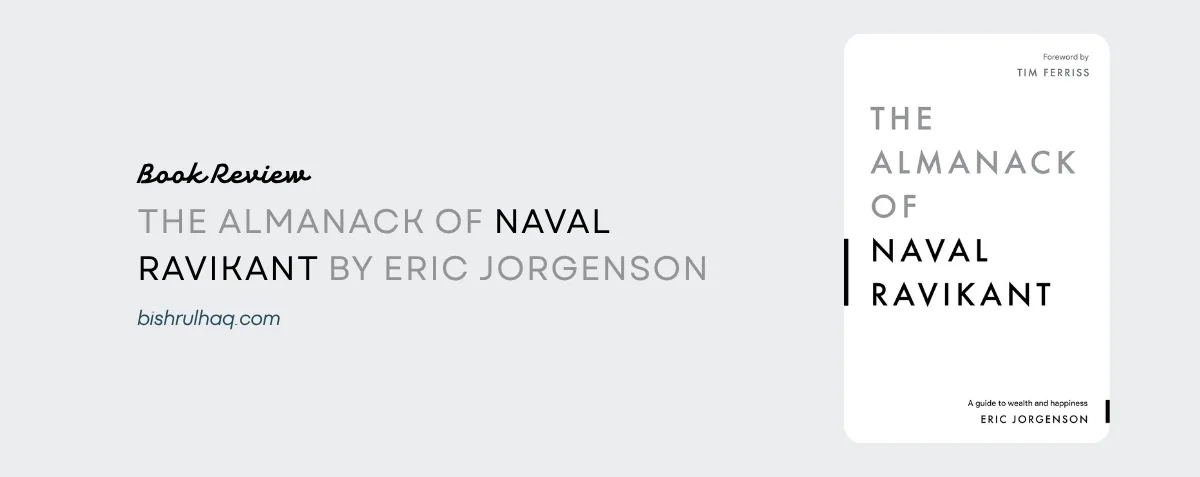
I had been hearing Naval quoted on Twitter for years before I actually sat down with this book. People kept lifting one-liners from his old podcast and his "How to Get Rich" thread, and most of them sounded slightly too clever to be useful.
I assumed the book would be more of the same. I was wrong. The Almanack of Naval Ravikant is not a book in the traditional sense. It is a collection that Eric Jorgenson has stitched together from podcasts, tweets, and interviews, and the editing is what turns it from a content scrape into something genuinely worth reading.
What this review covers
- Why I expected this to be a Twitter scrape, and what changed my mind
- The wealth, happiness, and status split that reframed how I read my own choices
- The four or five lines I keep coming back to, with context
- Where I push back, and who I would not hand the book to
What the book actually is
The first half is about wealth. The second half is about happiness. There is a short third part on philosophy and reading. That sounds like a self-help template, but the framing is unusual. Naval treats wealth and happiness as two separate skills, both learnable, both mostly internal. He is also clear that wealth is not the same thing as money. Wealth is "assets that earn while you sleep." Money is how we transfer time and value. Status is a zero-sum game. You can opt out of the third one entirely if you decide to.
That distinction sounds simple until you start applying it. I caught myself, while reading, mentally sorting my last few years of choices into wealth-building, money-earning, and status-chasing. A surprising amount of what I thought was wealth was actually status. It was not pleasant to notice.
The lines I keep coming back to
Play long-term games with long-term people. All returns in life, whether in wealth, relationships, or knowledge, come from compound interest.
This one reframed how I think about the people I work with. The teammates I want around in five years are not always the loudest in standups today. The clients I want to keep are the ones who will still take my call in 2031. Naval keeps making this point in different ways, and it lands harder each time.
Specific knowledge is found by pursuing your genuine curiosity and passion rather than whatever is hot right now.
In a working life that constantly tells you to chase whatever is hot right now, this is the line I needed five years ago. The skills I am proudest of are the ones that came out of side projects nobody asked me to do. The trends I picked because they were loud have all been replaced by something else.
The chapter on happiness
The second half surprised me more than the first. Naval is unusually direct about happiness being a default state that anxiety and craving cover up. He does not pretend he is enlightened. He talks about meditation as a maintenance practice, not a transformation. He treats his own irritability and impatience as problems to be solved, the way you would approach anything else you wanted to fix in your life.
One specific frame stuck. Naval says he keeps a list of things he wants. The exercise is not to chase the list. The exercise is to notice that wanting itself is the source of unhappiness, and that you usually want a lot less than you think you do once you write it down. I tried this on a Sunday afternoon. The list was depressingly short and most of the items had nothing to do with money. That is a useful kind of small.
The book on balance
✓ What works
- Short. About 240 pages, and you can dip in anywhere
- The structure is closer to a commonplace book than a treatise
- Tight editing. Among the highest signal-to-noise ratios in the genre
- Free online in full, which is itself an unusual move
- Simple ideas, applied with patience until they actually land
✕ Where it falls short
- Detached when he writes about relationships and family
- Less guidance on what to do with freedom once you have it
- A few lines work better as tweets than as advice
- A quiet survivorship bias in the wealth section the book never names
Info
A small, unusual detail
The book is free online in full at navalmanack.com. The print copy I keep on my desk is a thank-you, not a paywall. That is genuinely rare in the self-help category and worth knowing before you buy.
Who I would hand it to
- Anyone who suspects they are trading their time too cheaply for too small a return.
- Anyone who feels stretched thin by social comparison and wants permission to opt out.
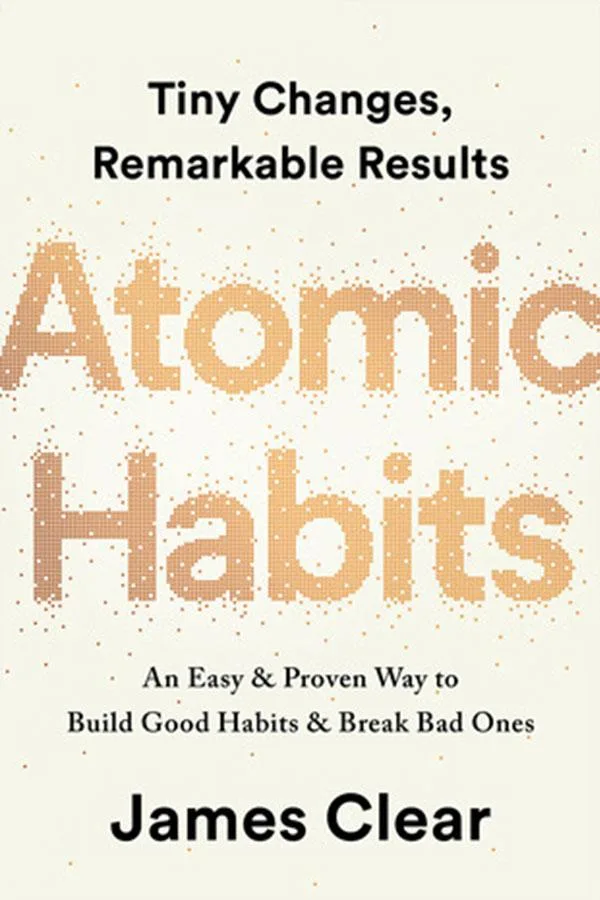
- Readers who liked Atomic Habits for the actionable bite, but want something philosophically heavier.
I would skip it if you are looking for a step-by-step plan. There is no plan in here. There is a way of thinking that, if you sit with it long enough, makes a lot of plans unnecessary.
Final thought
I keep this book on my desk now, in the spot where my old reference books used to live. I open it at random when I am about to make a stupid decision driven by status or boredom. About two thirds of the time, the page I land on talks me out of it. That is a strange thing to say about a book made from internet posts. It is also why I am giving it five stars. Most books in this genre tell you what to do. This one quietly changes what you want to do, which is a lot harder and a lot more useful.






Comments
0No comments yet. Be the first to share your thoughts.