I did not plan to make a top five list this early in the year. Usually I like to let books sit for a while before I decide what they really did to me.
Some books are exciting while you are reading them and then disappear from your mind within a week. Some feel quiet at first, then start showing up in the way you spend money, talk to people, sit alone, or judge your own thoughts. The first half of 2026 gave me a little of both, so this list is about the books that stayed.
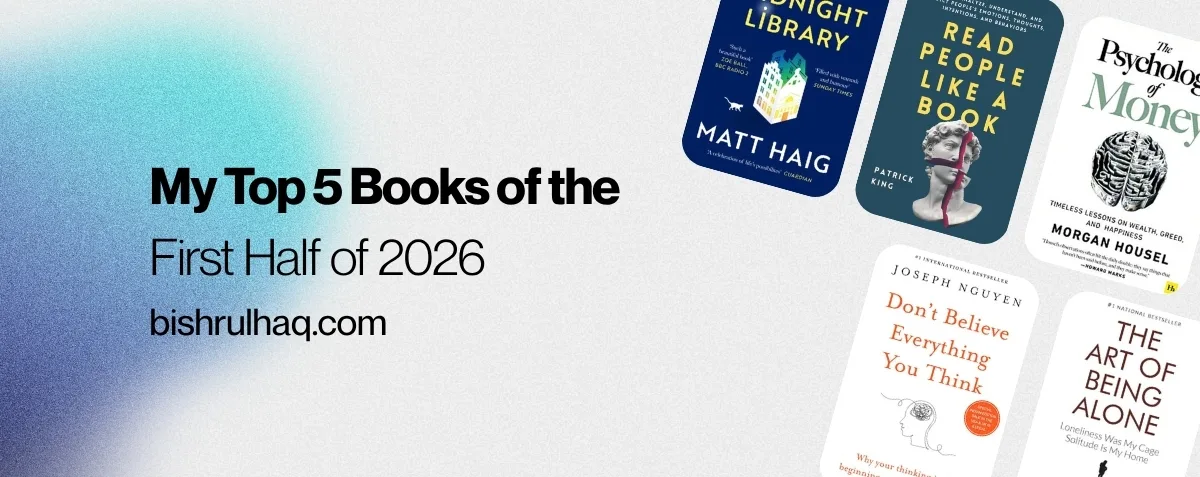
This is not the final best books of 2026 list. I will come back at the end of the year with a fuller year-end review of the best books I read in 2026, once the second half has had time to surprise me. For now, this is the mid-year shelf: five books I have already reviewed, reread in parts, recommended to people, or caught myself thinking about on normal days when I was not trying to think about books at all.
The mix is not neat. There is personal finance, a novel about regret, a short book about thoughts, a book on solitude, and a people-reading guide. That messiness is exactly why I enjoyed this half of the year. Reading across different lanes makes the lessons rub against each other. Money becomes emotional. Loneliness becomes practical. Fiction becomes a way of asking better questions about real life.
Mid-year reading notes
- This is a first-half 2026 ranking, not the final year-end list.
- All five books are already part of the book review shelf.
- The ranking is based on what stayed useful after reading, not just on enjoyment.
- A full year-end review of the best 2026 reads will come later.
Info
How I picked the top five
I looked at three simple things: what I remembered without checking notes, what changed a small behaviour, and what I could honestly recommend to a real person. A book can be smart and still fail that test. These five passed it.
The top 5 books so far
-
1
Best overall
The Psychology of Money by Morgan Housel
This is the book I would hand to almost anyone first. It does not treat money as a spreadsheet problem. It treats it as a behaviour problem, which is closer to the truth. Housel writes about luck, risk, greed, patience, compounding, and enough in a way that feels calm without becoming boring. The best idea I took from it is that doing well with money is less about being the smartest person in the room and more about staying reasonable for a very long time. That is a boring sentence until you realise how rare it is.
-
2
Best fiction pick
The Midnight Library by Matt Haig
This novel stayed with me because it turns regret into a place you can walk around inside. Nora Seed gets to visit lives she could have lived, and the book uses that magical setup to ask a very ordinary question: what if the life you keep dismissing is not as empty as you think? It is easy to call the book sentimental, and in places it is. But the emotional question is real. I finished it thinking less about alternate lives and more about the one I keep forgetting to inhabit properly.
-
3
Most useful short read
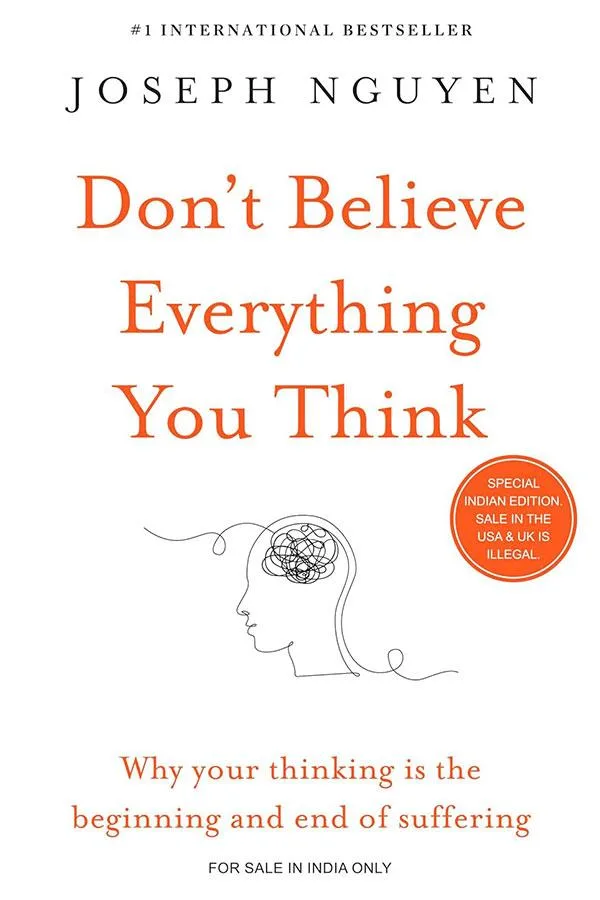
Don't Believe Everything You Think by Joseph Nguyen
This is the smallest book on the list, but it has a stubborn little idea at its centre: thoughts are not reality. That sounds obvious until you catch yourself obeying every anxious sentence your mind produces. Nguyen repeats himself, sometimes too much, but the repetition is part of why the book works. It keeps bringing you back to the gap between thinking and being. I would not call it a complete philosophy of life, but as a reset button for overthinking, it earns its place.
-
4
Best quiet companion
The Art of Being Alone by Renuka Gavrani
I picked this up expecting something soft and obvious. It was softer than some of the other books here, but not in a weak way. The book reframes being alone as a skill you can practise, not a punishment you have to survive. That mattered to me. A lot of people are surrounded by noise and still deeply lonely. Gavrani does not solve that in one book, but she gives language to the difference between isolation and solitude. That distinction is worth keeping close.
-
5
Most practical social read
Read People Like a Book by Patrick King
This book is not perfect. It repeats itself, and some parts feel like they could have been trimmed. Still, I kept enough from it to include it here. The useful pieces are about noticing patterns instead of pretending you can decode a person from one gesture. King is strongest when he writes about motives, emotional states, and context. The title sounds sharper than the book actually is, but the better lesson is gentler: pay closer attention, assume less, and watch what people do over time.
Why The Psychology of Money is number one
If I had to choose only one book from the first half of 2026 to reread, it would be The Psychology of Money. Not because every chapter changed my life. Some chapters simply confirmed things I already believed. But the book has the rare quality of making simple ideas feel newly serious. Save more than you think you need. Avoid financial decisions that require perfect timing. Leave room for error. Do not confuse being wealthy with looking wealthy. None of this is flashy. That is the point.
The chapter that stayed with me most is about enough. There is a kind of ambition that is healthy, and there is a kind that keeps moving the finish line until you no longer know what winning would even feel like. Housel does not shame ambition. He just asks whether the game you are playing has a stopping rule. That question has followed me into purchases, plans, and even work decisions. A good money book should make you better with money. A great one should make you more honest about desire. This one did both.
The emotional surprise of the list
The Midnight Library was the emotional surprise. I expected to like it. I did not expect it to linger. Fiction earns its place differently from nonfiction. It does not give you a framework to apply on Monday morning. It gives you a room to sit in, and if the room is built well, you come out seeing your own life at a slightly different angle.
The book made me think about regret as something that often edits out the costs of the life we did not choose. We imagine the missed path as clean, successful, and emotionally simple. Haig keeps showing that every life has its own grief, boredom, compromise, and small beauty. That is a useful correction. It does not make every choice equal. It does make the current life harder to dismiss casually.
The practical middle three
The middle three books work because they touch daily life. Don\'t Believe Everything You Think is about the private weather of the mind. The Art of Being Alone is about what happens when the room gets quiet. Read People Like a Book is about the space between you and everyone else. Put together, they cover a lot of ordinary human trouble: overthinking, loneliness, and misunderstanding people.
I do not think any of these three is the best-written book of the year. That is not the standard I used. The standard was usefulness after the last page. Did the book leave behind a phrase, a question, a little practice, or a changed instinct? Nguyen left me with a pause before believing a thought. Gavrani left me with a kinder view of solitude. King left me watching patterns before making conclusions. That is enough.
✓ What works
- The list covers money, fiction, thought patterns, solitude, and social awareness.
- Every pick left behind something practical after reading.
- The ranking gives new readers a good route into the existing book-review shelf.
- It sets up a natural year-end 2026 best books follow-up.
✕ Where it falls short
- It is still only a mid-year list, so the second half of 2026 can change the final order.
- A few strong books reviewed earlier in the year had to be left out.
- The list leans toward personal development, with only one fiction title in the top five.
Closing note
The best reading from the first half of 2026 did not give me one grand lesson. It gave me several small corrections. Be calmer with money. Stop romanticising alternate lives. Do not believe every thought just because it arrives loudly. Learn to be alone without treating loneliness as proof that something is wrong. Watch people more carefully, but with more humility.
That is a good half-year of reading. Not perfect, not complete, but useful. I will come back at the end of 2026 with a proper year-end review of the best books I read across the whole year. By then, some of these may move down. One or two may hold their place. A book I have not opened yet may take the top spot. That is the fun of keeping a reading life alive. The shelf keeps changing, and if you are lucky, so do you.

Comments
0No comments yet. Be the first to share your thoughts.